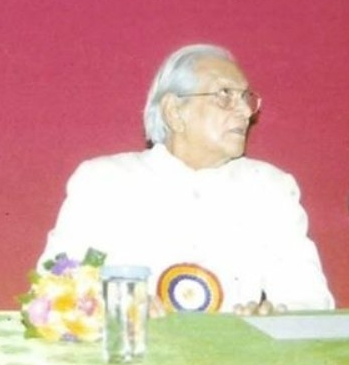
Majrooh Sultanpuri
Personal Details
Majrooh Sultanpuri — Basic Details
Majrooh Sultanpuri is a well-known Indian Urdu poet and Hindi film lyricist, born in Sultanpur. This section brings together the key personal details of Majrooh Sultanpuri — including real name, date of birth, age, birthplace, hometown, religion and nationality — for readers searching for a quick, factual overview.
Majrooh Sultanpuri — Physical Stats & More
Beyond the basics, here are Majrooh Sultanpuri's physical stats and other personal details that fans frequently look up — including height, marital status, education and career debut.
Majrooh Sultanpuri Biography
Majrooh Sultanpuri, born Asrar ul Hassan Khan on 1 October 1919 in Sultanpur, was one of the towering figures of Urdu poetry and Hindi film lyric-writing, a writer whose words shaped the emotional vocabulary of Indian cinema across more than five decades. Trained first as a poet in the classical Urdu ghazal tradition, he brought a rare literary refinement to the popular film song.
Remarkably, he began adult life on a different path, studying and briefly practising Unani medicine as a hakim, before his gift for poetry drew him toward the mushaira circuit and then to the Bombay film industry. From his debut in 1946 to his death in 2000, he wrote lyrics for many of Hindi cinema's most enduring songs while remaining a serious and respected literary poet.
This page covers the Majrooh Sultanpuri biography, age, family, education, his poetry and film-lyric career, notable songs, his landmark awards including the Dadasaheb Phalke Award, and his political convictions and imprisonment. As he is a deceased historical figure, this profile treats his life factually and respectfully, and flags any detail that is not reliably documented.
Majrooh Sultanpuri Family & Early Life
Majrooh Sultanpuri was born into a Muslim family in Sultanpur; his father served in the police department. He received a traditional religious education before turning to poetry and, later, to film. Reliable mainstream detail about his parents and early household is limited, and this profile does not embellish beyond what is documented.
His son, Andaleeb Sultanpuri, followed him into the film industry as a lyricist and director, continuing the family's association with Hindi cinema, and a daughter is also reported. Precise, well-sourced information about his spouse is not consistently available in mainstream references, so that detail is left unstated here rather than guessed at.
Majrooh Sultanpuri Career & Notable Work
- Majrooh first made his name as a serious Urdu poet on the mushaira circuit, becoming a disciple of the celebrated poet Jigar Moradabadi, before being drawn into Hindi cinema. His film-lyric debut came in 1946 with 'Jab Usne Gesu Bikhraye' from Shah Jehan, composed by the great Naushad, launching a career of extraordinary longevity.
- Over the following decades he collaborated with virtually every major music director of his era, from Naushad, O.P. Nayyar and Madan Mohan to S.D. and R.D. Burman and, much later, Anand-Milind and Jatin-Lalit. He wrote timeless songs such as 'Chahunga Main Tujhe' from Dosti, 'Chura Liya Hai Tumne' from Yaadon Ki Baaraat, and 'Pukarta Chala Hoon Main.'
- His versatility was such that he remained relevant across multiple generations of cinema, memorably writing the lyrics for the youth-defining Qayamat Se Qayamat Tak in 1988 and for 1942: A Love Story in 1994, decades into his career. This ability to keep speaking to new audiences set him apart among his contemporaries.
Notable Songs
- 'Chahunga Main Tujhe' (Dosti)
- 'Papa Kehte Hain' (Qayamat Se Qayamat Tak)
- 'Ae Mere Humsafar' (Qayamat Se Qayamat Tak)
- 'Ek Ladki Ko Dekha' (1942: A Love Story)
- 'Chura Liya Hai Tumne' (Yaadon Ki Baaraat)
- 'Pukarta Chala Hoon Main' (Mere Sanam)
- 'Achha Ji Main Haari' / classic Nasir Hussain-era songs
- 'Raat Kali Ek Khwab Mein Aayi' (Buddha Mil Gaya)
- 'Hum Hain Rahi Pyar Ke' (Nau Do Gyarah)
- 'Jab Usne Gesu Bikhraye' (Shah Jehan)
Majrooh Sultanpuri Relationships & Personal Life
Majrooh Sultanpuri was a man of firm political conviction as well as literary distinction. Associated with the Progressive Writers' Movement and holding left-wing, communist-leaning sympathies, he was imprisoned in 1949 after refusing to apologise for a poem considered seditious, and his principled stand became part of his legend.
Throughout his life he maintained a dual identity as both a mass-market film lyricist and a respected literary poet, never fully abandoning the ghazal even as he wrote for popular cinema. He died on 24 May 2000 in Mumbai, aged 80, following prolonged lung illness.
Majrooh Sultanpuri Net Worth
As a lyricist whose most productive decades long predated today's celebrity-finance and net-worth culture, and who passed away in 2000, Majrooh Sultanpuri is not associated with any reliable wealth estimate. His legacy is measured in the influence and endurance of his words rather than in monetary terms.
No audited, officially disclosed or independently verified net-worth figure exists for him, and none could meaningfully be constructed after the fact. Any number attached to his name would be entirely speculative and is therefore not offered here.
Majrooh Sultanpuri Musical Style & Impact
Majrooh Sultanpuri's becoming the first lyricist to receive the Dadasaheb Phalke Award in 1993 stands as a formal acknowledgement of a truth many already felt: that the film lyricist could be as vital to Indian cinema's artistry as any director or composer.
His unmatched career longevity, writing hit songs from the 1940s all the way into the 1990s, made him a living bridge across generations of Hindi film music, and his lyrics remain woven into the collective memory of the subcontinent.
As both a serious Urdu poet and a beloved popular songwriter, and as a writer willing to go to prison for his convictions, Majrooh embodied a fusion of literary excellence, mass appeal and moral courage that continues to make him a revered figure decades after his death.
Some Lesser-Known Facts About Majrooh Sultanpuri
- Here are some lesser-known and interesting facts about Majrooh Sultanpuri that go beyond the headlines:
- He was born Asrar ul Hassan Khan; 'Majrooh' (meaning 'wounded') was his poetic pen name.
- He trained and briefly practised as a hakim (Unani medicine practitioner) before becoming a poet.
- His first film song, 'Jab Usne Gesu Bikhraye,' was composed by the legendary Naushad in 1946.
- He was a disciple of the celebrated Urdu poet Jigar Moradabadi.
- He was imprisoned in 1949 and reportedly refused to apologise for a poem deemed seditious.
- He won the Filmfare Best Lyricist Award in 1965 for a song from Dosti.
- In 1993 he became the first lyricist to receive the Dadasaheb Phalke Award.
- His career as a film lyricist spanned more than five decades, from 1946 into the 1990s.
- His son, Andaleeb Sultanpuri, also became a film lyricist and director.
- He wrote the lyrics for the generation-defining 1988 film Qayamat Se Qayamat Tak.
Awards & Recognition
FAQs
Discography & Work Highlights
Related Lyricists